

Not all escape rooms are created equal.
Some feel immersive and unforgettable. Others feel like puzzles placed inside a locked office. The difference is not luck. It is design.
A great escape room blends story, psychology, pacing, and environment into one cohesive experience. When done well, players stop thinking about mechanics and start living the moment.
So what separates average rooms from the best escape rooms?
Let’s break it down.
Immersion Comes First
The best escape rooms create a world.
The moment players step inside, they should feel transported. Lighting, sound, textures, props, and layout all work together to create atmosphere. When immersion is strong, players forget they are playing a game.
For example, Wizardry & Wizard Tournament builds a magical environment where the setting feels complete. From visual detail to puzzle mechanics, everything supports the theme. That kind of immersion does not happen by accident. It is intentional from the ground up.
Immersion is not decoration. It is the foundation of great design.
Story Gives Purpose
Without a strong narrative, escape rooms can feel like disconnected puzzles.
A compelling story turns a collection of clues into a mission. Instead of solving random locks, players are completing an objective.
In The Revengers, the storyline drives urgency and teamwork. Every puzzle connects to a larger goal. That connection keeps engagement high and gives players a reason to push forward.
Storytelling also strengthens emotional payoff. When teams succeed, it feels earned. When time runs out, it still feels meaningful because the narrative had direction.
Great escape rooms are built around story first, puzzles second.
Puzzle Flow Matters More Than Difficulty
Many players assume harder means better.
That is not always true.
A great escape room balances challenge with momentum. Puzzle flow refers to how clues connect and how naturally players move from one discovery to the next.
If players feel stuck for 20 minutes without progress, frustration builds. If puzzles flow logically, teams stay engaged and energized.
In Party Planning Committee, puzzle progression is structured to keep small groups moving consistently. Clues build on each other in a way that rewards observation and communication.
The goal is not to overwhelm players. It is to challenge their problem solving skills while maintaining momentum.
Teamwork Is Built Into the Room
Escape rooms are some of the most effective team building activities available.
Unlike simple icebreaker games or quick exercises like the human knot, escape rooms require active collaboration under a time limit.
A great room ensures every team member has something to do. Information should be distributed throughout the space. Tasks should encourage communication skills. Solutions should require multiple perspectives.
In Friendsgiving, teams naturally divide roles and share discoveries. That design encourages team works rather than individual performance.
Because escape rooms demand communication and coordination, they are ideal for corporate team building and team bonding activities.
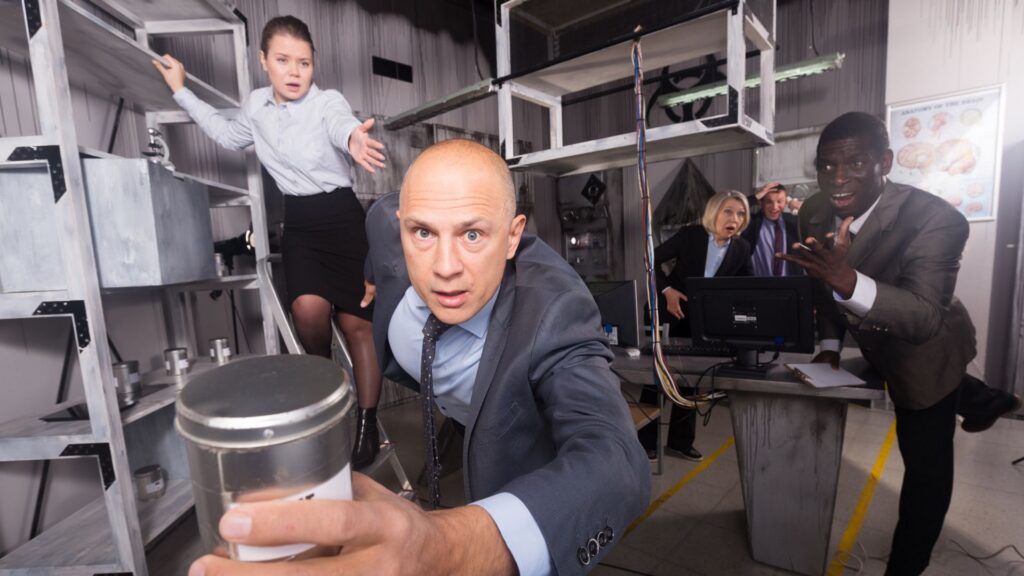
Escape Rooms as Team Building Events
Many companies use escape rooms as a team building game because the format encourages leadership, listening, and collaboration.
Traditional team building exercises might last 15 minutes or 30 minutes and feel forced. Escape rooms create organic pressure that reveals real dynamics.
In a 60-minute experience, you see:
- How team members handle stress
- Who steps into leadership roles
- How well communication flows
- How efficiently information is shared
For corporate team building, this insight is valuable.
Large groups can split into smaller teams and compare results afterward. Small groups can build trust quickly through shared challenge.
Because escape rooms combine fun team building activities with meaningful problem solving skills, they remain one of the most popular options for team building events.
Time Pressure Creates Energy
The ticking clock changes everything.
With a defined time limit, every decision matters. That urgency creates adrenaline. It also encourages faster collaboration.
Unlike a scavenger hunt where participants may move at their own pace, escape rooms require focused attention. Players cannot drift. They must stay engaged.
That pressure builds excitement without being overwhelming.
When teams solve a puzzle with only 5 minutes left, the emotional payoff is real.
Design for Different Group Sizes
Great escape rooms are flexible.
Small groups should feel challenged but not overloaded. Large groups should feel engaged without overcrowding.
Room layout plays a major role. Physical space must allow movement. Puzzle distribution must prevent bottlenecks.
For example, rooms designed with multiple simultaneous puzzle paths prevent one team member from dominating the experience.
This structure ensures better team works and stronger overall participation.
The Right Use of Technology
Technology can enhance immersion, but it must be subtle.
Hidden triggers, lighting effects, and automated elements can elevate storytelling. However, visible mechanics break the illusion.
The best escape rooms integrate technology quietly. Players experience the outcome, not the mechanism.
Good design feels seamless.
Attention to Detail
Details matter more than most players realize.
Are props consistent with the theme?
Does every object serve a purpose?
Does the environment feel complete?
Strong attention to detail separates average rooms from the best escape rooms.
Even small inconsistencies can pull players out of the moment.
Great design keeps players inside the world from beginning to end.
Escape Rooms and Remote Workers
As remote workers become more common, companies look for meaningful in-person experiences.
Escape rooms offer a powerful reset.
Unlike short team building exercises that last 20 minutes, escape rooms provide a shared challenge that requires full participation.
For remote teams meeting face-to-face, the experience builds connection quickly. It reinforces communication skills and encourages natural team bonding activities.
That shared success carries back into the workplace.
Emotional Impact Is the True Measure
At the end of the day, the best escape rooms create emotion.
Excitement when a lock opens.
Relief when a clue makes sense.
Laughter when a mistake turns into a breakthrough.
When players walk out replaying moments and talking about strategy, the design has succeeded.
Escape rooms are not just entertainment. They are immersive experiences built on psychology, collaboration, and story.
What Makes the Best Escape Rooms Stand Out
The best escape rooms combine:
- Strong immersion
- Clear narrative
- Logical puzzle flow
- Balanced challenge
- Team-based design
- Emotional payoff
When all of these elements work together, players stop thinking about mechanics.
They start living the experience.
And that is what makes a great escape room.